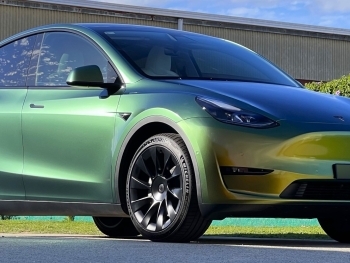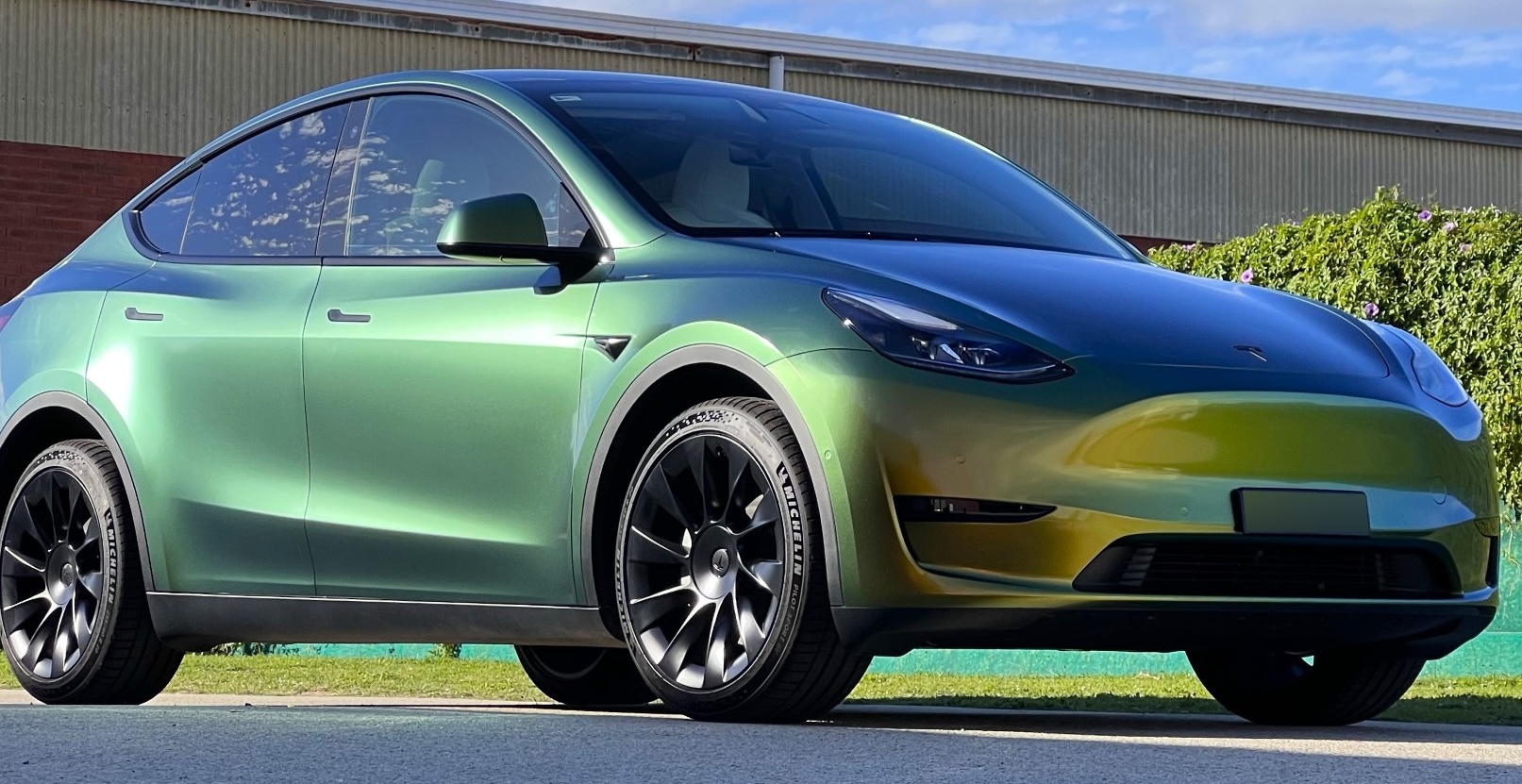
Wrapping a Tesla isn't fundamentally different from wrapping any other car in terms of the basic process, but a handful of design and material quirks specific to Tesla's vehicles change how an experienced installer approaches the job. Owners switching from a traditional gas car to an EV often don't realize these differences exist until they're comparing quotes.
Tesla's Minimalist Panel Design
Tesla vehicles have fewer body seams and a more minimalist panel layout than many traditional automakers, which actually simplifies some parts of the wrapping process but requires more precise seam placement since there are fewer natural break points to hide them. Getting this wrong is more visually obvious on a Tesla's clean design than it might be on a car with more body lines to work with.
Thinner, Softer Factory Paint
Tesla's factory paint has a well-documented reputation for being thinner and more prone to chipping than paint from many legacy automakers, which changes the calculus around whether to wrap directly or apply PPF underneath high-impact areas first. Installers experienced with Tesla specifically tend to recommend this extra step more consistently than those used to traditional vehicles.
Glass Roof and Sensor Considerations
Tesla's large glass roof and various exterior sensors and cameras require careful attention during wrapping to avoid interfering with functionality or leaving visible film edges around sensitive components. This is an area where installers without EV-specific experience sometimes make avoidable mistakes.
Charging Port and Panel Access
The charging port design and certain panel access points differ from traditional vehicles, requiring installers to know exactly how to work around them without leaving gaps or requiring awkward seams. It's a small detail, but one that shows up clearly in the finished product if handled incorrectly.
Why EV-Specific Experience Matters
None of these differences make wrapping a Tesla dramatically harder, but they do mean a shop with real experience wrapping EVs specifically will avoid mistakes that a traditionally-focused shop might not anticipate. Anyone researching Tesla wrap Miami options should specifically ask about the installer's experience with EVs rather than assuming all wrap experience transfers directly.
FAQ
Does wrapping a Tesla take longer than wrapping a traditional car?
It can, particularly around sensors, cameras, and the glass roof, which require extra care compared to a standard vehicle.
Should I get PPF before wrapping my Tesla?
Many installers recommend it given Tesla's softer factory paint, especially on high-impact panels like the front bumper and hood.
Are there wrap materials that work better specifically for Teslas?
Not materially different from other vehicles, but installer experience with Tesla's specific panel layout matters more than material choice alone.